Days of Horror
Historical Horror & True Crime Archive
Historical Horror & True Crime Archive
Early Years
The autumn of 1888 settled over the East End of London like a funeral shroud. Thick smoke drifted from factory chimneys, rainwater pooled in the cobbled streets of Whitechapel, and fear spread faster than the fog itself. Among the hundreds of constables ordered to patrol those gaslit alleys was a young police officer named Edmund Cryer.
At just twenty-two years of age, Edmund was already a man hardened by poverty, violence, and the grim realities of Victorian London. Born into a working-class family in the early 1860s, he had grown up amid overcrowded tenements and the relentless grind of industrial life. Joining the Metropolitan Police offered him stability, purpose, and the faint hope of climbing beyond the circumstances of his birth. Yet nothing in his training prepared him for the horror that awaited him in Whitechapel.
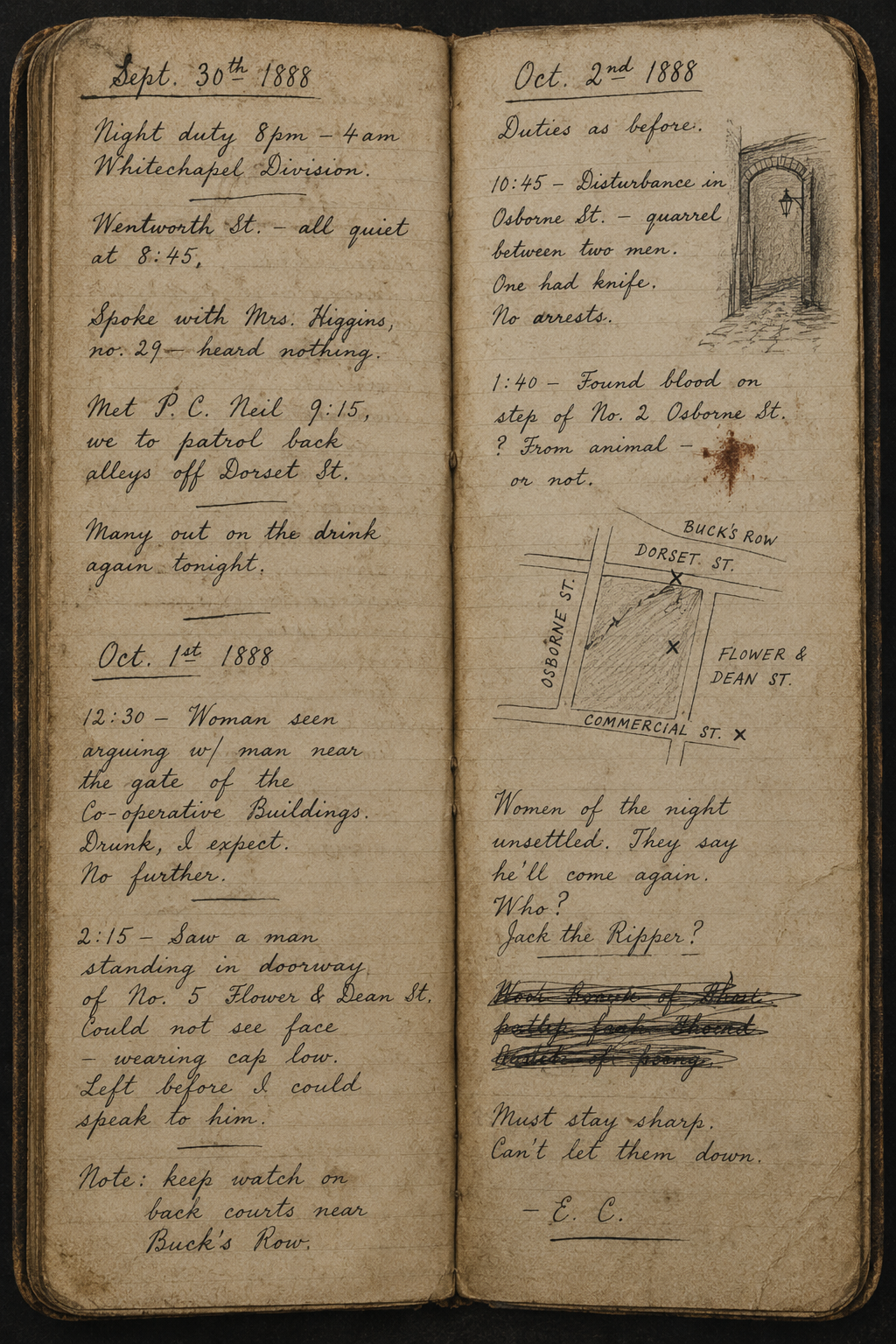
The murders attributed to the figure the newspapers christened “Jack the Ripper” transformed the district into a place of terror. Edmund walked those streets night after night beneath flickering lamps, listening to drunken arguments echo from public houses and the distant cries of women trying to survive another evening. The stench of sewage, smoke, and blood became inseparable from his memories of that year.
He was among the officers called to the scene in Hanbury Street following the murder of Annie Chapman. The brutality of what he witnessed there would remain with him for the rest of his life. The mutilation was unlike anything he had imagined another human being capable of inflicting. Older officers turned pale at the sight. Edmund himself reportedly struggled to eat for days afterward.
But it was Miller’s Court that truly haunted him.
On the morning of November 9th, 1888, Edmund was present among the officers who entered the small room where Mary Jane Kelly had been murdered. The scene inside was catastrophic. Kelly’s body had been mutilated beyond recognition in the privacy of her own room, the killer having taken his time in unimaginable savagery. Edmund later confessed to fellow officers that the silence of that room disturbed him more than the blood itself. For years afterward, he suffered recurring nightmares of that cold November morning.
The Ripper was never caught.
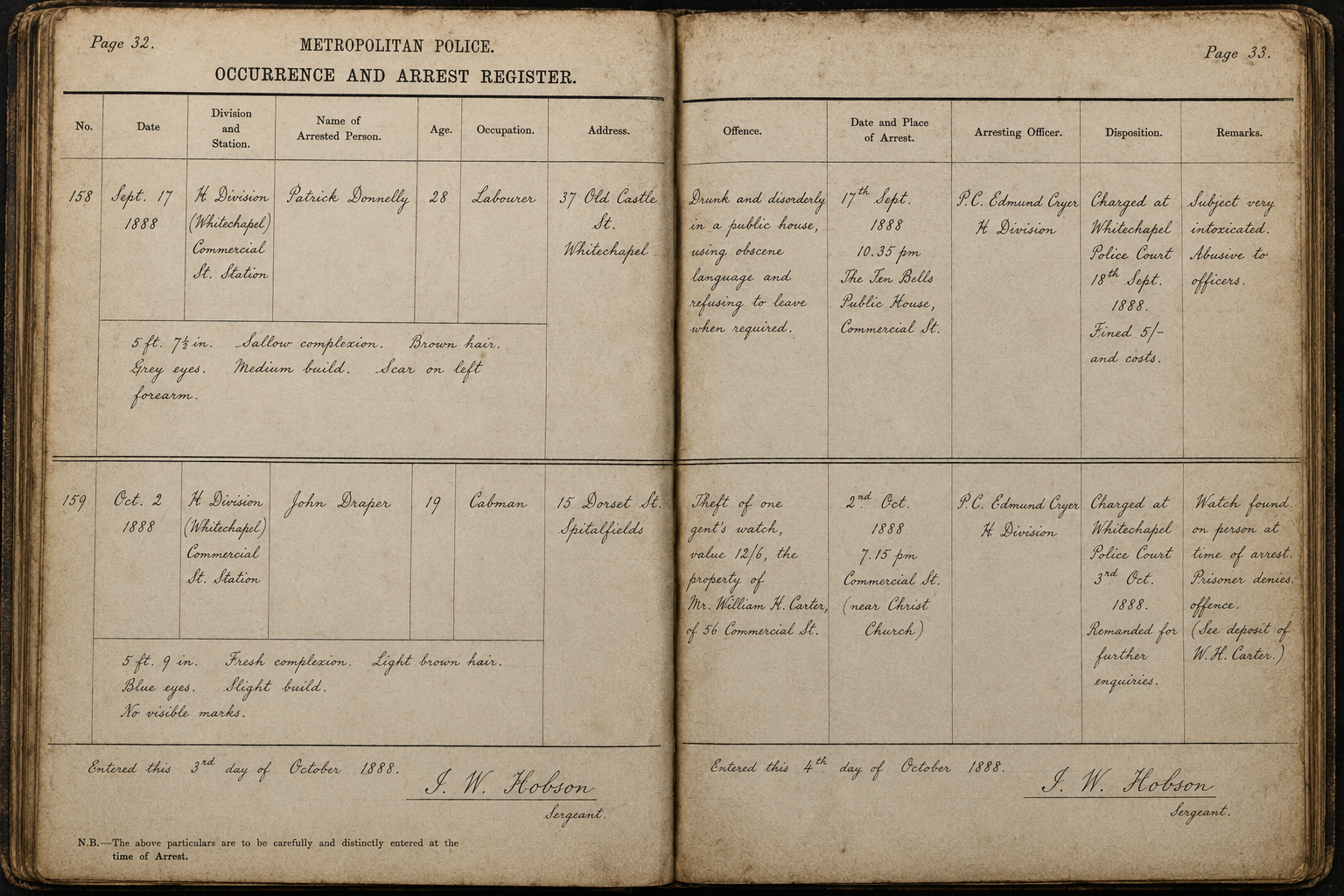
Though many officers abandoned the force or descended into alcoholism after the case, Edmund endured. He buried himself in police work, earning a reputation as a disciplined and relentless constable. Beneath his stern exterior, however, remained a man carrying ghosts no one else could see.
Amid the darkness of Whitechapel, Edmund found one source of light: Emma Simms.
Emma was nineteen when they married in the closing years of the 1880s. Unlike Edmund, she possessed a quiet warmth that balanced his grim and guarded nature. Friends described her as intelligent, fiercely loyal, and capable of calming her husband during his worst periods of silence. She understood that the man she married carried unseen scars from the streets of London, though Edmund rarely spoke openly about what he had witnessed.
In 1889, the couple welcomed their first son, Thomas. Fatherhood changed Edmund profoundly. Determined that his children would never know the brutality he had seen in Whitechapel, he became deeply protective of his family. A second son, George, followed in 1901, bringing renewed joy into the Cryer household, while in 1904 their daughter Charlotte was born.
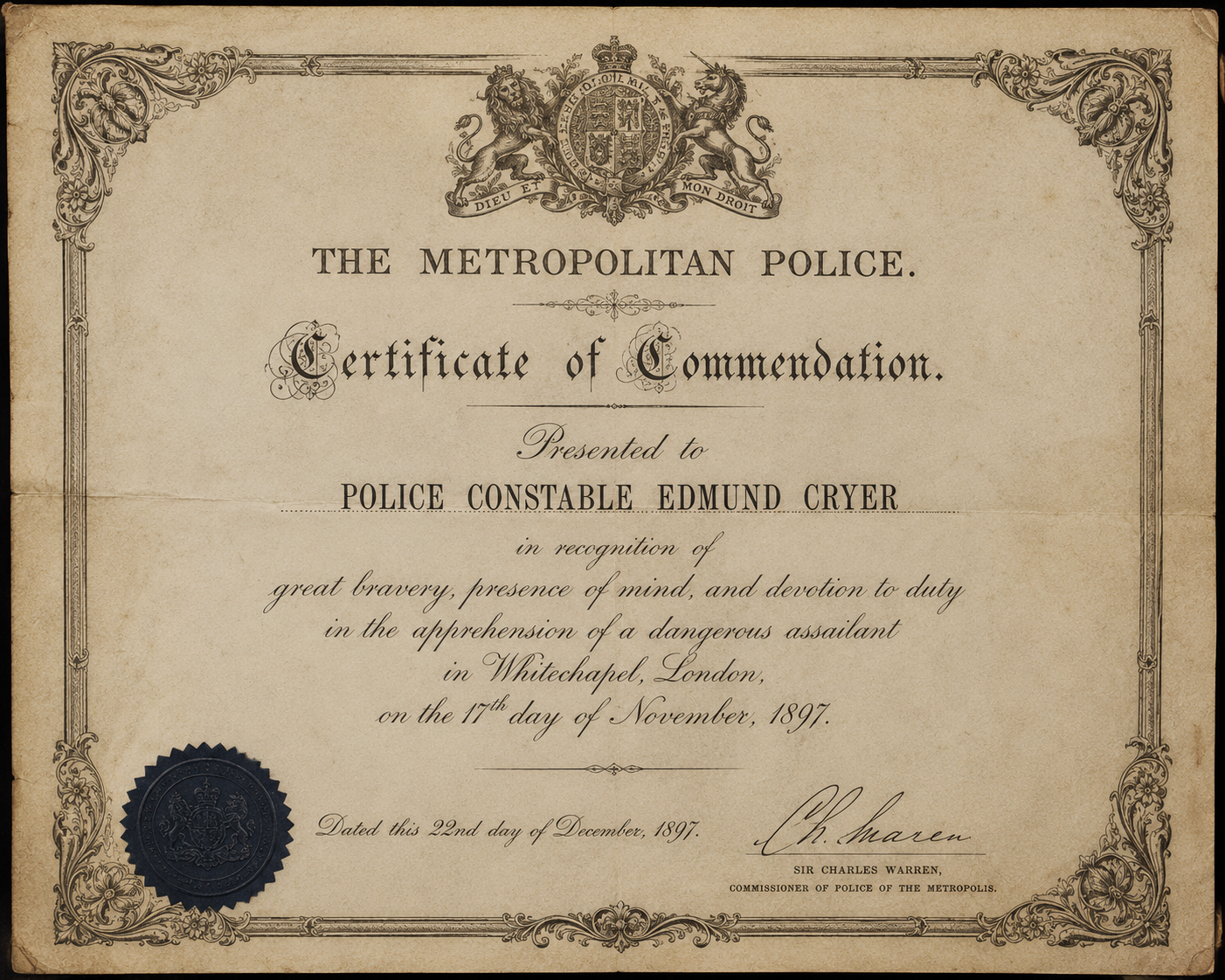
By then, Edmund had spent over fifteen years climbing steadily through the ranks of the police force. His experience investigating violent crime, combined with his calm authority under pressure, earned him numerous promotions. Fellow officers respected him not only for his instincts as an investigator, but for his refusal to sensationalise death. He treated victims with dignity in an era when many did not.
But the horrors of Whitechapel had never truly left him.
The murders of Annie Chapman and Mary Kelly remained burned into his memory with terrible clarity — images that surfaced in quiet moments, in dreams, and in the long silences between conversations. Though Edmund remained disciplined and dependable, the darkness of 1888 had followed him into every corner of his life. He became withdrawn at times, restless during the night, and prone to disappearing into thought without warning. The weight of what he had witnessed threatened not only his peace of mind, but the happiness of the family he loved more than anything.
It was Emma who first recognised what London was doing to him.
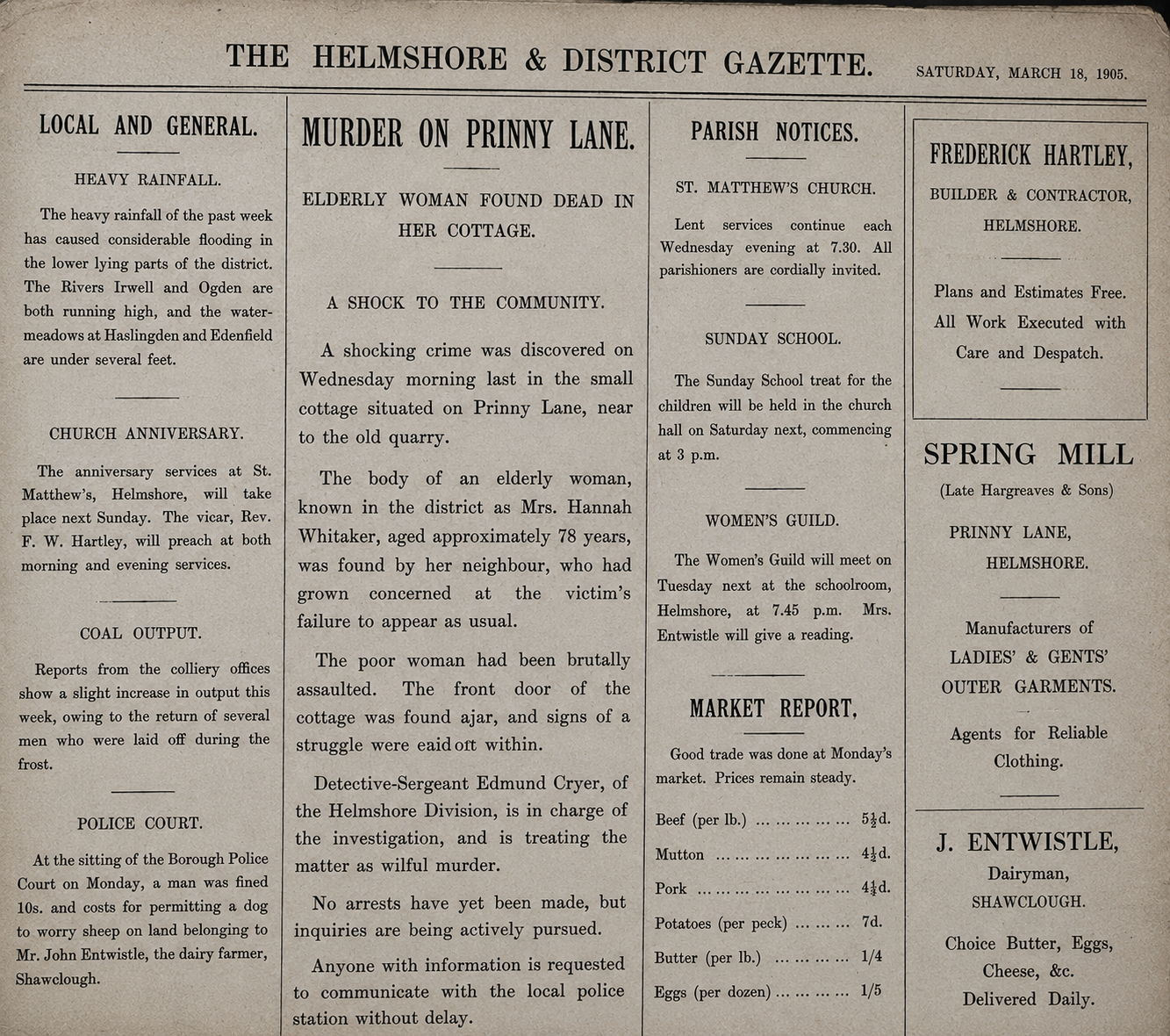
And so, in 1904, shortly after Charlotte’s birth and following his promotion to Detective Sergeant, Edmund made a decision that would change the course of their lives. He relocated Emma and the children from London to the quieter mill village of Helmshore in Lancashire.
Officially, it was a professional transfer and an opportunity for advancement.
In truth, it was an escape.
Edmund did not move north to forget London. He knew men never truly forgot such things. The dead remained with you. The faces remained with you. The smell of damp brickwork and blood beneath gaslight remained with you forever.
But he hoped distance might numb the memories.
He hoped the rolling hills, quieter streets, and slower rhythm of village life might help him control the darkness that had begun to dominate his thoughts. More than anything, he feared becoming consumed by it — feared that the ghosts of Whitechapel would one day cost him his marriage, his children, and whatever humanity he still possessed.
For the first time in years, Helmshore offered him silence instead of screams.
There, Detective Sergeant Edmund Cryer devoted himself to Emma, to Thomas, George, and young Charlotte, attempting to build the ordinary family life that had once seemed impossible amid the terror of London. To younger officers, he became something of a legend — a stern investigator with piercing eyes who had walked the streets during the reign of Jack the Ripper himself. Rumours spread that he possessed knowledge about the murders never released to the public. Edmund neither confirmed nor denied such stories.
Because some memories, he believed, were too terrible to speak aloud.
And because Edmund Cryer understood something few others did: evil was not confined to Whitechapel.
Sometimes, the hardest thing for a man to escape was his own memory.